
Last updated November 16, 2026
 Metal roofing
 Architectural shingles
 Tile roofing
 GAF
 Owens Corning
 Flat & low-slope
Free roof inspection with deck photos before we talk money - GAF and Owens Corning certified installation
Seasonal Roofing Care for Ventura: Year-Round Homeowner’s Guide
Ventura gets about 15 inches of rain a year, which is why so many homeowners here assume their roof lives an easy life. That number hides the real story. The Santa Ana winds that blow through before the rain season often do more damage than the rain itself, and the marine layer that settles over the city for much of the year quietly feeds moss and mold on roof sections that never see direct sun. This guide breaks the year into Ventura’s four actual roofing stress periods and explains what each one does to your roof. You’ll learn what to check, when to check it, how long each task takes, and where water hides after a storm.
Quick Answer
Seasonal roof care in Ventura works best when it follows the city’s real weather patterns rather than a generic four-season calendar: a pre-wind check before the Santa Anas arrive, a post-rain inspection after each winter storm, a spring look at shaded and low-pitch sections where the marine layer breeds moss, and a late-summer review of sealants and granules before the dry heat peaks. The tasks are simple and most take under an hour. What matters is timing them to the stress period each one addresses.
Styles & brands we work with
- Architectural shingles
- Metal roofing
- Tile roofing
- GAF
- Owens Corning
- Flat & low-slope
Table of Contents
- Ventura’s Four Roofing Stress Periods (Not Four Seasons)
- Pre-Santa Ana Preparation: The Task Most Homeowners Skip
- How the Marine Layer Attacks North-Facing and Low-Pitch Sections
- Post-Rain Inspection: Where Water Hides After a Short, Intense Storm
- Dry Summer Heat: Sealants, Granules, and UV Wear
- A Realistic Time Budget for Each Seasonal Task
- Matching Materials to Ventura’s Stress Cycles
- Your Ventura Roof Care Year at a Glance
Ventura’s Four Roofing Stress Periods (Not Four Seasons)
Most seasonal roofing advice was written for climates with hard winters and soaking springs. Ventura doesn’t work that way. What we have instead is a rotating set of stressors, each hitting a different part of the roof assembly, and each calling for a different check.
Period 1: The marine layer months. Cool, moist air pushes in and lingers, especially overnight and in the morning. Roof surfaces stay damp far longer than the rain total would suggest. This is the period that drives mold and moss initiation, and it hits shaded and low-slope sections hardest.
Period 2: Santa Ana wind events. Typically arriving in fall and recurring through winter, these dry, gusty offshore winds test every fastener, flashing edge, and loose shingle tab on the roof. Uplift pressure is the concern here, not water. Debris carried by wind is the second concern.
Period 3: Dry summer heat and UV. Long stretches of strong sun bake sealant lines, dry out pipe boot collars, and slowly wear granules off shingle surfaces. Nothing dramatic happens in a single day. The cumulative effect is what shortens roof life.
Period 4: Concentrated winter rain. Ventura doesn’t get drizzle for weeks. It gets storms that drop an inch or two in a short window, then clear out. That pattern finds every weak point in the runoff path at once: valleys, flashing joints, clogged drainage points, and the seams around penetrations.
The practical takeaway: build your roof care calendar around these four periods, not around spring, summer, fall, and winter. A task that makes sense in Ohio in April may be pointless in Ventura, and a task nobody elsewhere thinks about (pre-wind flashing checks) matters enormously here.
Pre-Santa Ana Preparation: The Task Most Homeowners Skip
If there’s one seasonal task Ventura homeowners underuse, it’s the pre-wind inspection. Do it before the fall wind season sets in, and you’ll catch the loose components that wind turns into leaks and missing shingles.
Here’s what to look at, in order:
- Ridge and hip caps. These sit at the highest, most wind-exposed points. Check that caps are seated and that no fasteners have backed out.
- Flashing at roof-to-wall junctions and chimneys. Wind works the edges of flashing first. Look for lifted edges, cracked sealant along the top edge, and any gap where the metal meets the wall.
- Field shingles, especially on windward slopes. Press gently along the lower edge of shingles at the corners and eaves. A tab that lifts easily is a tab the wind will take.
- Pipe boots and vent collars. These are small, cheap components that fail early and often. Cracked rubber collars let water in and wind can peel them away entirely.
- Tree limbs overhanging the roof. Trim back anything within reach of the roofline. A limb that scrapes shingles in a gust does damage you won’t see until the next rain.
- Loose debris on the roof surface. Palm fronds, leaves, and small branches become projectiles in a wind event. Clear them off before the wind picks them up.
This inspection takes about 30 to 45 minutes for a typical single-story home, longer on a complex roof with multiple valleys and penetrations. If you’re not comfortable on the roof, or if you’re looking at a steep pitch, have it done from the ground with binoculars and call in a professional for anything that needs hands-on checking. Walking a roof is one of the more common ways homeowners get hurt, and a fall from even a single-story roof is serious.
When we inspect a roof before wind season, the findings are usually minor: a lifted cap here, a cracked boot there. Those small fixes are far cheaper than the repair that follows a wind event that tore something loose. Our roof repair work in Ventura often starts with exactly these pre-wind findings.
How the Marine Layer Attacks North-Facing and Low-Pitch Sections
Here’s something that surprises homeowners: two sections of the same roof, a few feet apart, can be in completely different condition. The marine layer is why.
Moist air settles and lingers. On a roof, it lingers longest on surfaces that get the least direct sun: north-facing slopes, sections shaded by trees or taller structures, and low-pitch areas where air movement across the surface is slower. Those sections stay damp for hours longer than a south-facing slope that dries out shortly after sunrise.
What that means in practice:
- Moss and algae establish first on shaded slopes. Moss holds moisture against the shingle surface, which accelerates granule loss and, over time, can lift shingle edges.
- Low-pitch sections show wear earlier. Where water drains more slowly, organic debris collects and holds dampness against the roof. These are the sections most likely to develop soft spots or premature shingle deterioration.
- Mold and mildew appear on north-facing attic-side decking. If attic ventilation is weak, moisture that builds up under a damp roof surface has nowhere to go. That shows up as dark staining on the underside of the roof deck.
- Two-tone roofs are a sign, not a coincidence. When one side of a roof looks noticeably worse than the other, the marine layer plus sun exposure is usually the reason.
The fix isn’t complicated. Clear organic debris from shaded and low-pitch sections more often than you would on a sunny slope. Keep tree limbs trimmed back so air and light reach the roof. Check attic ventilation, because a roof that can’t dry from underneath will hold moisture longer no matter what you do on top. And when it’s time to replace shingles on a shaded section, choosing a product rated for algae resistance makes a real difference. We install and repair across several manufacturer lines, including IKO and Atlas, and we’ll steer you toward the option that makes sense for the specific section of roof in question rather than pushing whatever’s easiest to source.
Post-Rain Inspection: Where Water Hides After a Short, Intense Storm
Ventura’s rain comes in bursts. A storm drops an inch or two, clears out, and the roof dries within a day. That pattern means the damage window is short, and the evidence disappears fast. A post-rain inspection done within 24 to 48 hours of a storm will tell you far more than one done a week later.
Here’s the protocol we walk through after a rain event:
- Check the attic first, from inside. Look at the underside of the roof deck, especially along the ridge, at valleys, and around chimney and vent penetrations. Water stains, dark streaks, or damp insulation tell you where water got in even if nothing shows on the ceiling below.
- Walk the exterior perimeter and look up at the roofline. From the ground, check for lifted or missing shingles, displaced flashing, and debris piled in valleys or against penetrations.
- Inspect the interior ceiling and walls. Water travels along framing before it drips. A stain on a wall well below the roofline is often a roof leak following a rafter.
- Look at drainage points. Valleys, scuppers, and any roof-level drainage should be clear. Debris that collected during the dry months gets flushed into these points during the first storm of the season.
- Check around skylights and any roof-mounted equipment. These penetrations are common leak points, and a short, intense storm finds every failed seal around them.
- Note any staining or discoloration on fascia and soffit. Water that runs behind these components often leaves a mark before it shows up inside.
The most overlooked hiding spot after a Ventura storm is the flashing at roof-to-wall junctions on the uphill side of the roof. Water pools against that flashing briefly during heavy rain, and a small gap that never leaked in light rain will let water in when the volume spikes. The second most overlooked spot is the low side of a chimney, where the cricket or backer flashing directs water away. Both are worth a close look after every significant storm.
If you find staining or dampness, don’t wait for the next storm to confirm it. Water in the wrong place does more damage with time, not less. Our Hartwell Roof Repair team can take a look and tell you what’s actually going on before you commit to anything.
Dry Summer Heat: Sealants, Granules, and UV Wear
Summer in Ventura is a slow-burn stress period for a roof. Nothing dramatic happens in a single day. What happens is cumulative: the sun works on the materials that hold the roof together, and the damage shows up months later when the rain arrives.
What to check before and during the hot months:
- Sealant lines around flashing, vents, and skylights. Sealant is the first component to fail from UV exposure. Look for cracking, peeling, or shrinkage along the edges of metal flashing and around any penetration.
- Pipe boot collars. The rubber collar around plumbing vents cracks and splits as it ages, and summer heat speeds that process up. A split collar is a straightforward leak waiting to happen.
- Granule loss on shingles. Granules are the shingle’s UV shield. If you’re seeing bare patches, dark streaks where granules have worn away, or a noticeable amount of granule material in gutters and at downspout outlets, the shingles are aging faster than the surface suggests.
- Ridge cap condition. Ridge caps take the most direct sun and wind exposure. Check for cracking along the cap and any separation at the ridge.
- Roof surface debris. Dry plant material sitting on a hot roof surface holds heat and moisture against the shingles. Clear it off.
This is a reasonable time to look at the roof’s overall condition and think about material options, especially if the roof is on the older end of its life. A shingle that performs well in a cooler climate isn’t necessarily the one you want in Ventura’s UV exposure. That’s why we work with several leading shingle lines including Tamko and Boral alongside the others we install, and why we match the material to the specific roof and sun exposure rather than leading with a single brand.
A Realistic Time Budget for Each Seasonal Task
Seasonal roof care has a reputation for eating a whole weekend. It doesn’t have to. Here’s a realistic estimate for each task, based on a typical single-story Ventura home with a moderately complex roof. Two-story homes and roofs with many valleys and penetrations will take somewhat longer.
- Pre-Santa Ana inspection (ground-level + limited roof access): 30 to 45 minutes.
- Clearing debris from valleys and drainage points: 20 to 30 minutes.
- Trimming overhanging limbs (if you do it yourself): 30 to 60 minutes, depending on how much needs cutting.
- Post-rain interior inspection (attic + ceiling + walls): 15 to 20 minutes.
- Post-rain exterior walkaround: 15 to 20 minutes.
- Summer sealant and boot check: 20 to 30 minutes.
- Attic ventilation and deck check: 15 to 20 minutes.
Add it up and you’re looking at roughly three hours of attention spread across the year, most of it at ground level or in the attic. That’s the whole maintenance load for most Ventura homes, provided nothing major turns up.
Where the time budget really matters is in scheduling. The pre-wind check should happen before the fall wind season. The post-rain inspection should happen within a day or two of each significant storm. Summer checks can happen anytime the roof is dry. Putting those three touchpoints in a calendar, and treating them as seasonal appointments rather than open-ended chores, is what makes the routine stick.
Matching Materials to Ventura’s Stress Cycles
A roofing material that performs well in one climate may not be the best fit for Ventura’s combination of marine layer humidity, wind, UV, and concentrated rain. The roof has to handle all four, and no single product is best at everything.
Here’s how we think about it:
- Wind resistance matters more than most homeowners realize. A shingle with a stronger fastening pattern and a heavier mat handles uplift better. On a wind-exposed roof, that extra weight is worth the cost difference.
- Algae resistance pays off on shaded sections. Shingles rated for algae resistance last longer where the marine layer keeps a slope damp. If your roof has a shaded north-facing section, this is a real upgrade, not a marketing line.
- UV-resistant sealants and underlayments extend roof life on sun-baked exposures. Not all underlayments age the same way in strong sun.
- Pitch and drainage patterns shape the material choice. Low-pitch sections need a product suited to slower drainage, regardless of what’s installed elsewhere on the roof.
This is where material options matter. We install and repair across seven leading shingle lines, so we’re not limited to one option when a particular section of a Ventura roof calls for a specific product. On repair work, that also means we can often match existing shingles, which preserves the roof’s appearance and keeps any manufacturer warranty intact. Matching a two-tone patch of mismatched shingles is a common problem we fix for homeowners who had a previous repair done with whatever was on hand. You can read more about our roof replacement process if you’re weighing whether to repair or replace.
Your Ventura Roof Care Year at a Glance
Pulling the full year together, here’s what the seasonal calendar looks like for a Ventura home:
- Late summer / early fall: Pre-wind inspection. Check ridge caps, flashing, field shingles, pipe boots. Clear debris. Trim limbs. About 45 to 60 minutes total.
- Fall and winter (after each storm): Post-rain inspection. Start in the attic, then walk the exterior. Look at valleys, flashing junctions, and skylights. About 30 to 40 minutes per inspection.
- Late winter / spring: Marine layer check. Inspect shaded and low-pitch sections, clear organic debris, review attic ventilation.
- Late spring / summer: UV and sealant check. Look at flashing edges, pipe boot collars, and granule condition. Plan any material upgrades before the next rain season.
Two additional things worth putting on the calendar: a professional inspection every year or two, and a closer look after any storm that produces unusual wind or heavier rain than normal. Our technicians have up to experience, and an inspection is the cheapest way to learn what condition the roof is actually in before deciding on repair or replacement. For a broader look at the city and how its weather shapes roofing decisions, see our Ventura guide.
Common Mistakes to Avoid
- Skipping the pre-wind check because the roof looks fine. Loose ridge caps and lifted flashing edges are hard to see from the ground and easy for wind to turn into a real problem. A quick pre-season check catches them while the fix is small.
- Waiting weeks to inspect after rain. Ventura storms clear out fast, and the evidence dries with them. By the time a ceiling stain appears, the leak has usually been active for a while. Inspect within a day or two.
- Treating north-facing and south-facing sections the same. The shaded side of a Ventura roof ages differently, and often sooner. If you’re only looking at the sunny slope, you’re missing half the roof.
- Clearing shingles or debris with a pressure washer or blower. High-pressure water strips granules and forces water under shingle edges. Use a soft broom or leaf blower on low, and keep water off the roof surface entirely.
- Walking the roof in flimsy shoes or on a damp morning. Even a low-slope roof gets slick with marine layer moisture. One fall can cost far more than any maintenance task saves.
- Patching a leak without finding the source. Water travels along framing before it drips. A patch on the ceiling below the stain often misses the actual entry point on the roof entirely.
- Assuming a short rain season means a low-maintenance roof. Fifteen inches concentrated into fewer storms means each one does more work. The runoff paths get tested harder, not less.
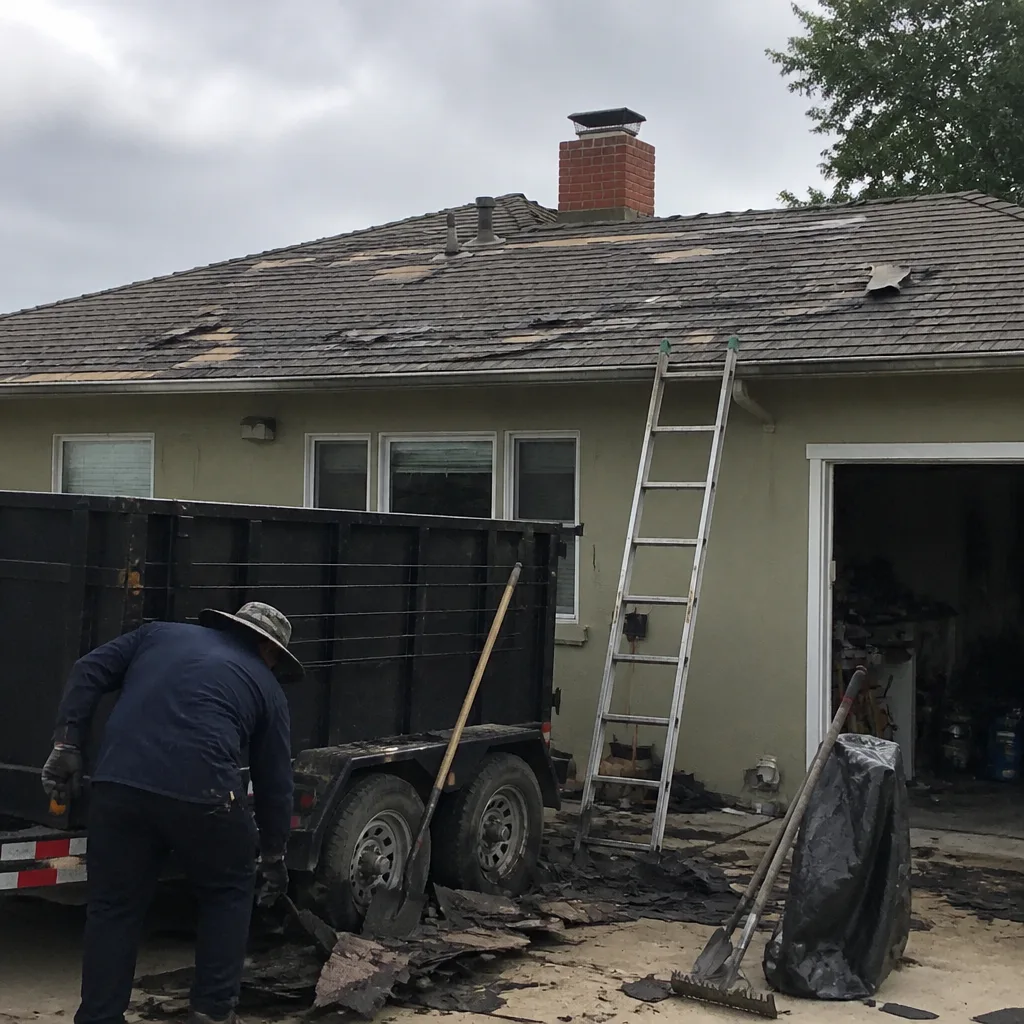
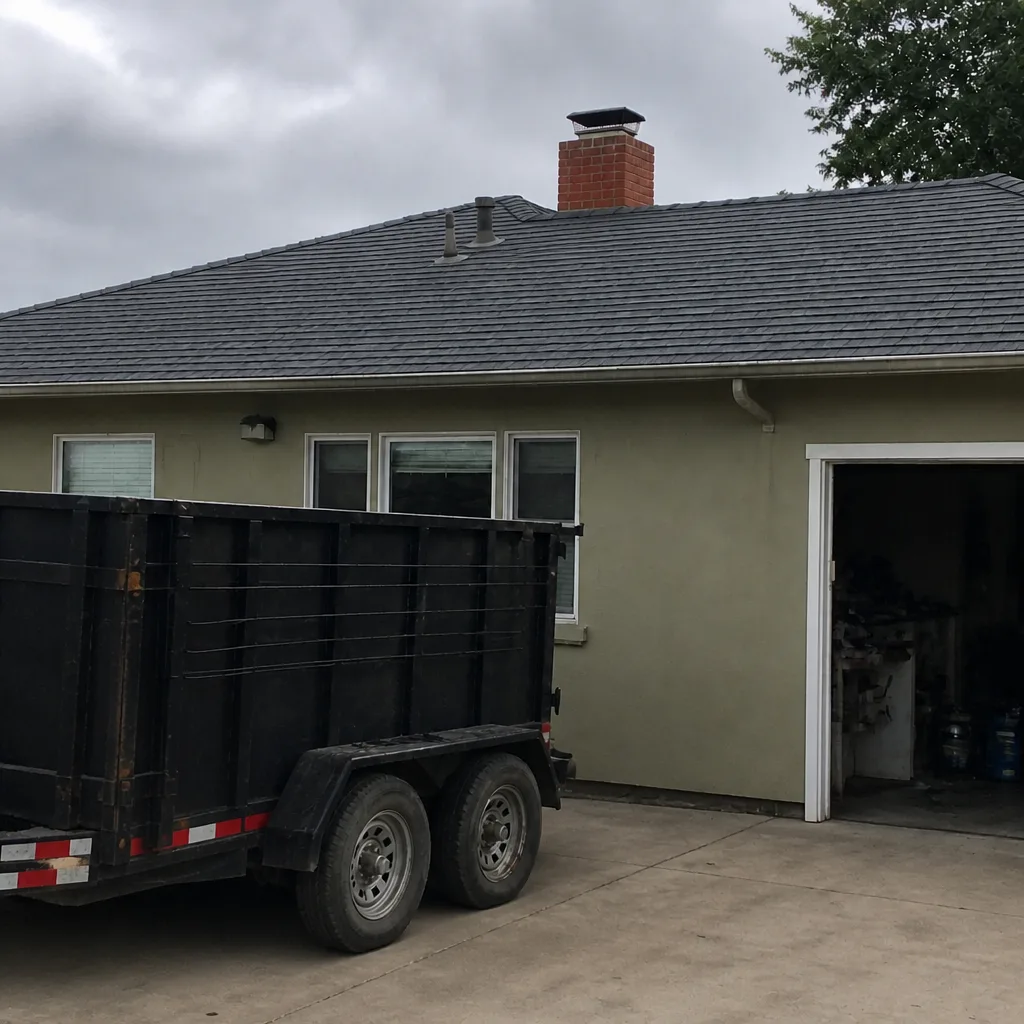
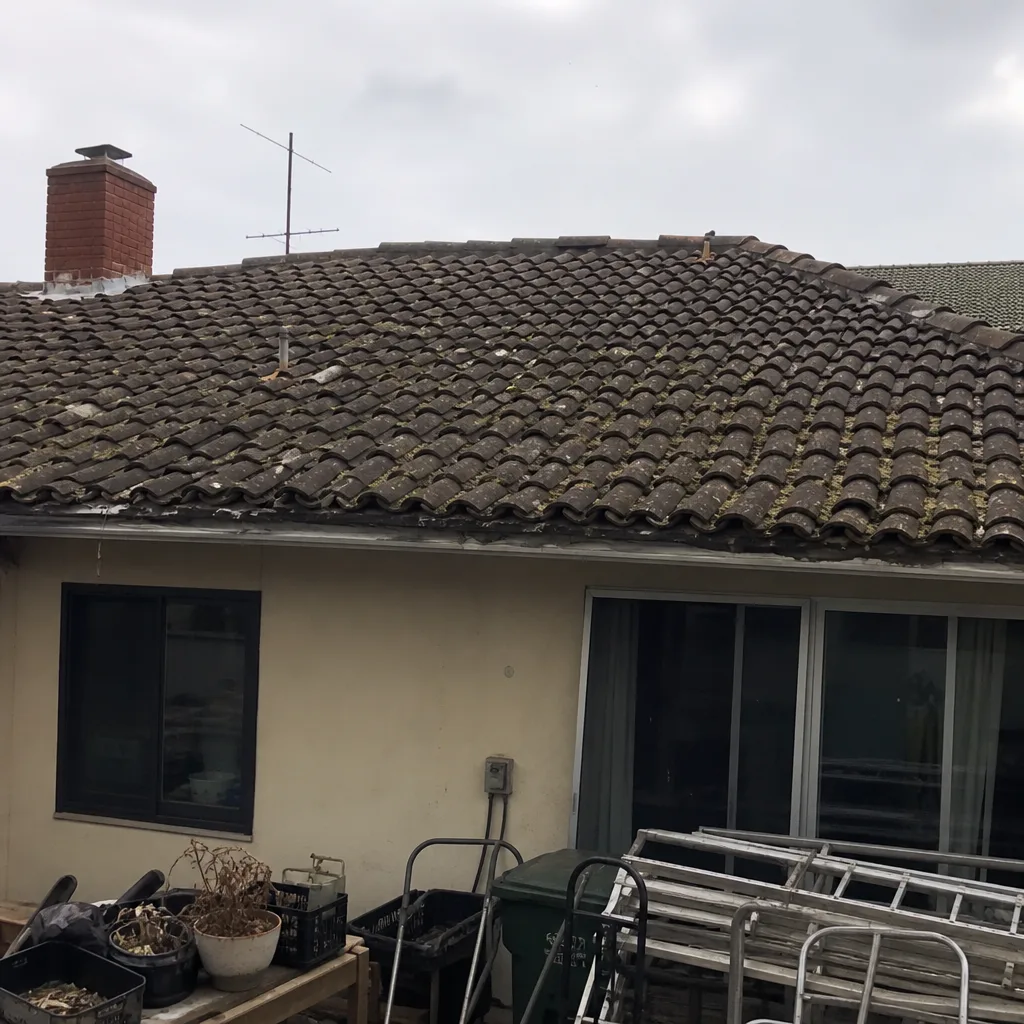
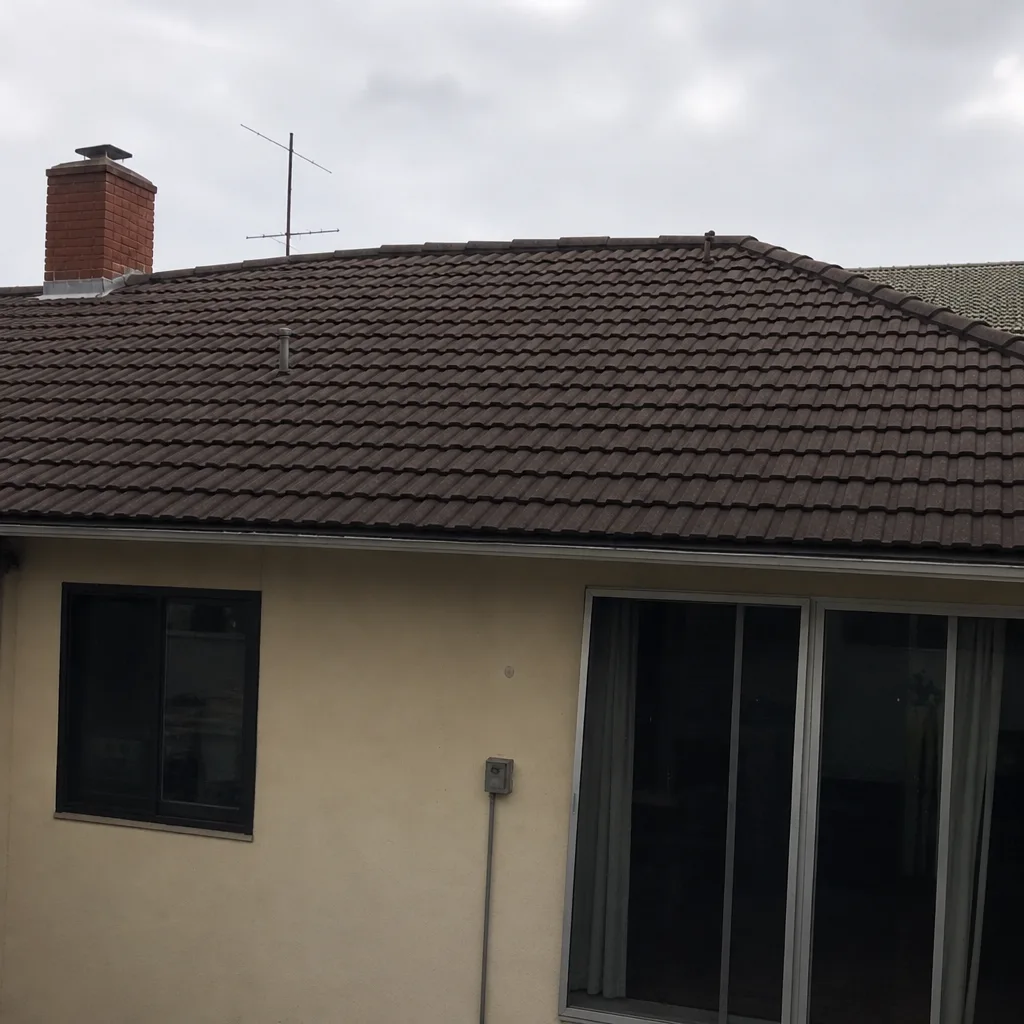
See the difference
 Before
 After
 Before
 After
 Before
 After
When to Call a Professional
Some roof care is safe for a homeowner with a ladder and some patience. Some isn’t. Call a professional when you’re dealing with a roof steeper than you’re comfortable on, any active leak, water staining in the attic or on ceilings, or unexplained dampness that keeps returning after storms. Call if you find lifted or missing shingles after a wind event, damaged flashing, or a pipe boot collar that’s cracked or split. And call if the roof is past its expected lifespan and you want an honest read on repair versus replacement before committing to either.
We don’t recommend anyone without proper fall protection walk a roof to inspect it themselves, especially a steeper pitch or a second-story home. The risks outweigh the savings. Hartwell Roof Repair offers free estimates in Ventura. Call (833) 946-8911. We answer 24/7. Fast dispatch from 7am to 7pm, Sunday through Friday.
Frequently Asked Questions
Once a year, plus a quick post-storm check after any significant rain or wind event. The annual inspection catches slow-developing issues like sealant wear and granule loss, while the post-storm checks catch anything the weather itself just exposed. Between the two, most problems get found while they’re still small repairs.
No. The 15 inches of annual rain comes in concentrated storms that test every runoff path at once, and the Santa Ana winds that precede the rain season often cause more damage than the rain itself. The marine layer and summer UV add two more stress periods that a rain-total approach misses entirely.
Ridge and hip caps, flashing at roof-to-wall junctions and chimneys, field shingles on windward slopes, pipe boots and vent collars, and any tree limbs near the roofline. Clear loose debris off the surface. Most of this can be checked from the ground with binoculars, and anything that needs hands-on checking is worth a professional look.
The most common hiding spots are flashing at roof-to-wall junctions on the uphill side, the low side of a chimney where the cricket directs water away, valleys where debris collects, and the underside of the roof deck near penetrations. Interior attic checks catch water long before it shows up on a ceiling.
Roughly three hours of attention spread across a full year for a typical single-story home. The pre-wind inspection is the longest single task, about 45 to 60 minutes including debris clearing. Post-rain inspections are quicker at 30 to 40 minutes each, and the summer sealant and UV check is about 20 to 30 minutes.
Yes, especially if the issue is anywhere you’d have to climb to reach. Failed sealant around flashing and cracked pipe boots are the most common sources of leaks in Ventura homes, and catching them early is far cheaper than repairing the water damage that follows. Call (833) 946-8911. Estimates are free.
The Bottom Line
Ventura’s roof care calendar doesn’t follow the seasons most remodeling guides describe. It follows four stress periods: marine layer dampness, Santa Ana wind events, dry summer UV, and concentrated winter rain. Each one attacks a different part of the roof, and each one has a specific check that takes under an hour. Do the pre-wind inspection before fall, the post-rain inspection after each storm, the marine layer check in late winter, and the UV check in summer, and you’ll catch most problems while they’re still small repairs. If something needs a closer look, or if the roof is headed toward replacement, that’s where we come in. One call covers inspection through replacement, and we’ll assess before we recommend anything.
Call (833) 946-8911 for a free estimate on any roof work in Ventura. We answer 24/7. Fast dispatch from 7am to 7pm, Sunday through Friday.
Written by the team at Hartwell Roof Repair.