
Last updated November 16, 2026
 Metal roofing
 Architectural shingles
 Tile roofing
 GAF
 Owens Corning
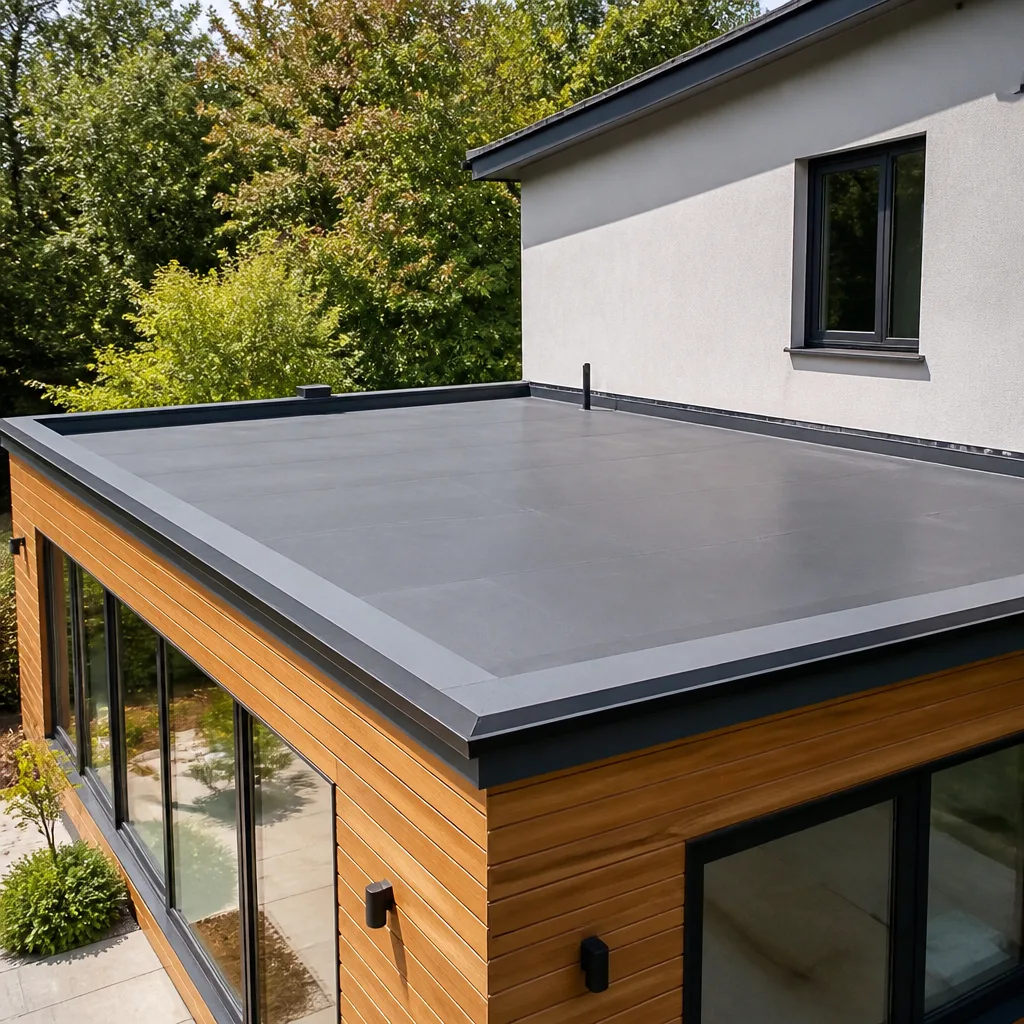 Flat & low-slope
Free roof inspection with deck photos before we talk money - GAF and Owens Corning certified installation
Roofing Warning Signs: A Ventura Homeowner’s Reference Guide
The warning sign Ventura homeowners most consistently ignore isn’t visible from the street. It’s the faint darkening on a north-facing eave, the kind that looks like a shadow until you realize the sun never hits that corner. By the time that darkening shows up as a stain on the ceiling below, the biological growth underneath it has usually worked through more than one layer of shingles. Most guides tell you what serious damage looks like after the fact. This reference is built the other way around: it’s organized around the earliest signals you can actually see, smell, or feel in Ventura’s climate, so you catch problems while they still sit in the repair range instead of the replacement range.
Quick Answer
In Ventura, the earliest roof warning signs are granule loss concentrated on sun-facing slopes, dark streaking and moss on shaded north and east slopes, staining on rafters and attic decking, and hairline stucco cracks at parapet walls. Cosmetic aging is even, gradual, and dry. Structural aging is uneven, spreading, and wet. The way to tell them apart is by pattern and location, not by how bad it looks from the driveway.
Styles & brands we work with
- Architectural shingles
- Metal roofing
- Tile roofing
- GAF
- Owens Corning
- Flat & low-slope
Table of Contents
- The Three Tiers of Roof Warning Signs
- Ground-Level Signs You Can Spot Without a Ladder
- Ventura-Specific Warning Signs Most Guides Miss
- Interior Clues: What Your Attic Is Telling You
- Touch and Texture: Signs That Require Getting Closer
- Cosmetic Versus Structural Aging
- The Repair, Monitor, or Replace Decision Matrix
- Common Mistakes to Avoid
- When to Call a Professional
The Three Tiers of Roof Warning Signs
Every roof warning sign falls into one of three tiers based on how close you have to get and how much interpretation it requires. Understanding the tiers keeps you from missing something because you were only looking from the sidewalk, and from overreacting to something that needs a closer look before you panic.
Here’s how we think about it:
- Tier one, ground level. These are things you can see from the yard or across the street, usually with binoculars. Uneven ridgelines, dark streaks, missing shingle tabs, flashing that has pulled away. These tell you something is happening but not how serious it is.
- Tier two, interior. These are clues you find inside the attic or on interior ceilings and walls. Staining on decking, discolored insulation, rafter marks. These give you a location, which is often more useful than a symptom visible only from outside.
- Tier three, touch and texture. These require getting onto or very near the roof: crumbly shingle edges, spongy decking underfoot, mortar that gives when you press it. This is where a trained eye separates normal aging from failure, because texture is much harder to fake than appearance.
In our experience across Ventura, most preventable replacements start as a tier-one sign that sat unread for a season or two. The tiering is really about attention, not severity. Hartwell Roof Repair works through all three tiers during a single inspection, which is why an assessment catches things a visual scan from the driveway won’t.
Ground-Level Signs You Can Spot Without a Ladder
You don’t need to get on the roof to notice the first tier. Spend ten minutes in the yard with a pair of binoculars and a critical eye, and you’ll get most of the way to an honest read on your roof’s condition.
Start with the yard itself. Granule accumulation in the gravel or along the base of the downslope is the most reliable ground-level indicator of shingle wear. A few granules here and there is normal as a roof ages. A persistent band of dark, sand-like grit collecting in the same spot tells you shingles in that area are losing their protective surface.
Then, look up. Here’s a quick checklist to run from the ground:
- Is the ridgeline straight, or does it dip and sag between supports?
- Are there visible dark streaks running vertically down the slope, especially on shaded sides?
- Are any shingle tabs cracked, curled, or missing entirely?
- Does the flashing around the chimney or vents sit flush, or has it pulled away?
- Are there dark patches of moss or algae colonizing one section more than the rest?
- Do you see any “shiners” – the heads of fasteners pushing up through shingles?
If you find one item, make a note and check again in a few months. If you find three or more, it’s worth a proper look. Ventura’s sun hits south- and west-facing slopes hardest, so it’s common to see a south-facing slope aging noticeably faster than the north on the same house. That asymmetry is itself information: it tells us which slope is doing the most work and where the wear is headed.
Ventura-Specific Warning Signs Most Guides Miss
Generic roof guides are written for a national audience, which means they miss the failure patterns we actually see in Ventura. Three signs in particular show up here that you won’t read about on most contractor sites.
Efflorescence on chimney brick
That white, powdery crust on brick is called efflorescence, and it’s the residue of water-soluble salts that have been carried to the surface and left behind as moisture evaporates. On a chimney, it’s a sign that water is getting into the brick through the mortar joint or the flashing at the roofline and being driven out through the face. Efflorescence by itself isn’t structural, but ongoing efflorescence is a reliable indicator that the source of moisture hasn’t been fixed. If you see it growing or returning after you scrub it off, the flashing or crown is the place to look.
Stucco cracking at parapet walls
Ventura homes with flat or low-slope sections often have parapet walls at the roof edge, and those walls are stucco over wood framing or masonry. Hairline cracks appear as buildings move with temperature, but cracks that run in a straight line, or that appear in the same place on multiple walls, usually track a structural edge beneath. At a parapet, those cracks become a path for water to wick down behind the stucco and into the roof assembly – water that never shows up on the interior ceiling because it’s absorbed at the wall first.
Granule loss on unshaded slopes
Asphalt shingles shed granules as they age, but in Ventura the loss is concentrated on sun-exposed slopes. When those south- and west-facing slopes lose their granule cover faster than the shaded sides, that’s UV degradation, not general aging. UV-damaged shingles get brittle, curl at the edges, and stop shedding water properly. If you’re seeing granule loss on only one slope, the roof isn’t done – but that slope is doing most of the work on borrowed time, and it’s the one we watch most closely.
Tile mortar color change at ridges
On tile roofs, the mortar at ridges and hips is often the first part of the roof to fail. A healthy mortar joint is one color; mortar that has been absorbing and holding moisture shifts toward a duller, greyer tone as it ages. The color change itself isn’t the problem, but it tells you the joint is saturated, which means the ridge cap is losing its bond. In a Ventura tile roof, the ridge is often where water first gets inside the assembly.
We look for these patterns specifically because they’re the signs that tend to be missed during a quick look and caught during a real one. roof repair in Ventura often starts with one of these exact items, and catching any of them early is usually the difference between a small fix and a bigger project.
Interior Clues: What Your Attic Is Telling You
Most homeowners never look in their attic unless something has already leaked through. But the attic is where the earliest, most diagnostic roof clues live, and they’re often the ones that pinpoint where the failure actually is.
The most useful interior signs, in order of how directly they map to a roof problem:
- Rafter staining patterns. Water on a rafter tends to follow the grain toward the eave. A dark stain that runs down and stops at a purlin tells you the water source is above that purlin, not below it. A stain that appears in a V or diagonal pattern usually tracks to a flashing failure or a missing shingle at one specific spot.
- Decking discoloration. Plywood or OSB decking that has absorbed moisture looks darker or blotchy. If the discoloration is concentrated in a single area above the rafters, that’s a direct map to the failed exterior location.
- Insulation discoloration. Insulation that has absorbed water collapses and darkens. A uniform graying means age; a localized dark, matted patch almost always means a specific roof leak above that spot.
- Attic humidity readings. If you’ve got a hygrometer (a cheap one from a hardware store works), check it during a dry stretch. Persistently high humidity with no obvious source is a clue that warm, moist air is coming up from the house and not venting out – which can look like a leak later.
- Musty smell or visible mold on the underside of the roof deck. This is the biological growth that starts under the shingles and works down. It’s also the earliest sign of the very thing the opening of this guide described.
Ventura’s relative humidity tends to hang around a certain level most of the year, and a well-ventilated attic should handle that without any trouble. If yours doesn’t, the roof assembly may be missing ventilation, or moisture may be coming in at a flashing point that doesn’t yet have a visible leak.
Touch and Texture: Signs That Require Getting Closer
Some warning signs are about what things feel like, not what they look like. These are the ones that separate a repair from a replacement, and they almost always need a trained technician to read correctly.
Here’s the basic idea of what we’re testing when we get close:
- Shingle edge texture. A healthy shingle has a flexible, slightly gritty edge. A shingle at the end of its life cracks apart or crumbles when you press the edge. This is the simplest way to tell an aged shingle from a failing one.
- Decking flexibility. Walking across a roof, a spongy section underfoot means the sheathing beneath has absorbed water and lost structural rigidity. That’s a bigger problem than a shingle defect and usually means water has been getting in for a while.
- Mortar firmness at ridges and hips. On tile roofs, pressing gently on the ridge mortar shows whether it’s sound or has begun to crumble. Soft mortar means the cap is loose, and a loose cap lets water behind the tile field.
- Fastener heads at the flashing. Roofing nails that have backed out enough to show their heads at a flashing point are the early stage of a leak. Fasteners that are fully exposed mean the shingles above them are already compromised.
- Seams at valley and intersection points. These are the spots where the roofing material transitions, and where a small failure turns into a big one. A valley that’s still sealed is a valley that will hold.
This is the tier where hands-on experience really matters. Repairs and material assessments at this level are what our technicians bring up to 12 years of experience to, and the reading they give you is usually more definitive than anything you could piece together from the ground.
Cosmetic Versus Structural Aging
The hardest judgment call on a roof isn’t “is this damaged” – it’s “is this damaged in a way that matters.” Cosmetic aging and structural aging look similar from a distance, and telling them apart without training is the single most common source of bad decisions.
Here’s how to tell them apart in plain terms:
- Cosmetic aging is even. The granules thin out uniformly across the roof over the years, the color fades uniformly, and there are no concentrated hotspots. The roof looks older, but it’s behaving consistently.
- Structural aging is uneven. One slope is noticeably worse than the others. One corner is stained while the rest isn’t. Granules are missing from a stripe or a patch instead of a gradual fade.
- Cosmetic aging stays dry. Nothing under it is wet, discolored, or soft. The shingles look worn, but the assembly underneath is intact.
- Structural aging shows wet or soft spots. There’s a stain somewhere, a texture change, a spongy patch underfoot, or a ridge that’s gone soft. Those are signals from the structure, not the surface.
- Cosmetic aging doesn’t grow. If you check it again in six months, it looks the same. Structural aging moves – the stain is bigger, the dark patch has spread, the loose ridge cap is looser.
We use a simple working rule: cosmetic aging is a maintenance question, structural aging is an inspection question. Neither is automatically an emergency, but one is something you can watch and the other is something you should have assessed. The good news is that most cosmetic aging never becomes structural if it’s caught and looked after, which is exactly the repair-first approach we default to. roof replacement is the right answer for a roof that’s structurally failing across multiple areas – but not for a roof that’s simply showing its age in one spot.
The Repair, Monitor, or Replace Decision Matrix
You can make a solid first-pass decision about your own roof by combining three pieces of information: what sign you’re seeing, how old the home is, and when the roof was last serviced. None of those numbers alone tells you what to do, but together they give you a useful starting point for a professional conversation.
How to use the matrix
- Identify the sign and its tier. Is it a ground-level cue, an interior clue, or a touch-and-texture signal? Tier three signs get a professional look faster than tier one.
- Note the home’s age. A home built in the older parts of Ventura is more likely to have the kind of terracotta tile or older wood-shake roofs those neighborhoods were built with. A newer home is more likely to have an asphalt shingle roof that may still be in its first decade.
- Note the last service date. If you can’t remember the last time anyone was on the roof, treat it as overdue. A roof that has never had an inspection is a roof with no baseline.
- Cross the three. An old sign, an old home, and no recent service points toward assessment for replacement. A new sign, a younger home, and recent service points toward monitoring. Anything in between points toward repair or a diagnostic inspection.
Here’s a rough guide to how the three-way decision usually maps to the kind of sign you’re seeing:
- Repair: a localized sign (one stained rafter, one loose ridge cap, one crack at the parapet) on a roof that is otherwise intact. The goal is to fix the failure before it spreads.
- Monitor: a low-severity, non-growing sign on a roof that’s still mid-life. Photograph it, note the date, and check it again in six months. If nothing moves, it stays a monitor.
- Replace: structural aging that spans multiple slopes, a roof showing wet spots in more than one location, or a roof whose repair costs would not be proportionate to the value of the remaining roof. This is the case where a full replacement is the honest answer.
Your home’s specific age and service history matter most when you’re on the line between repair and replace. That’s the exact moment when a second opinion is worth asking for – and the reason we look before we recommend. Ventura homeowners can call for an inspection and get a straight answer on which of the three columns their roof lands in.
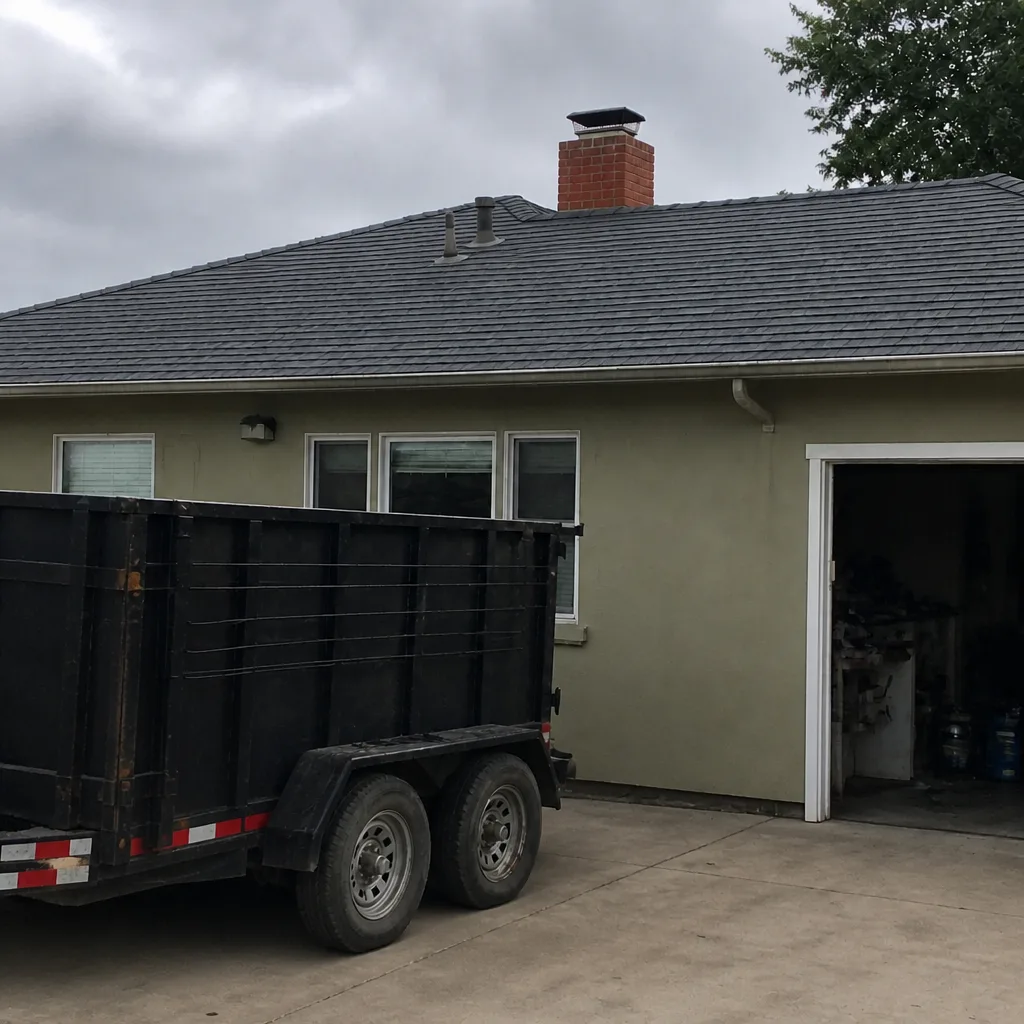
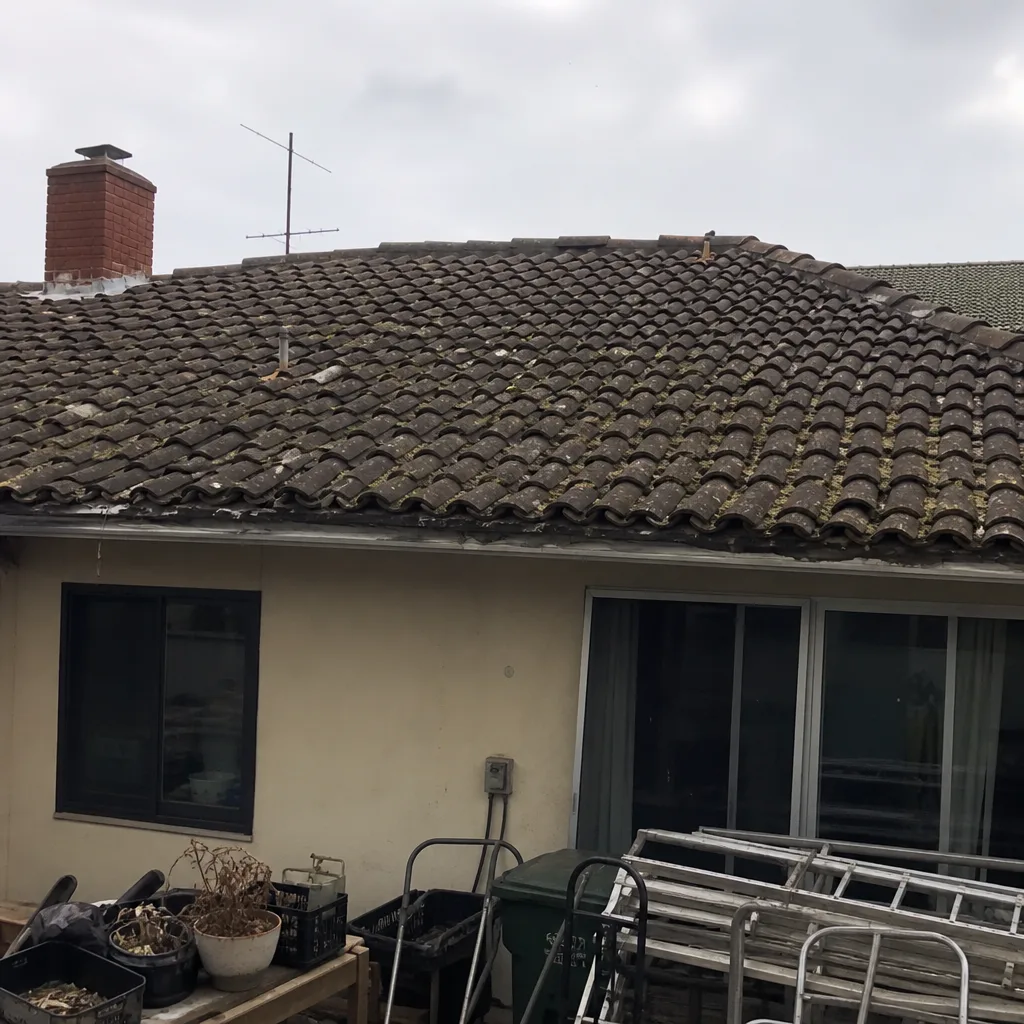
See the difference
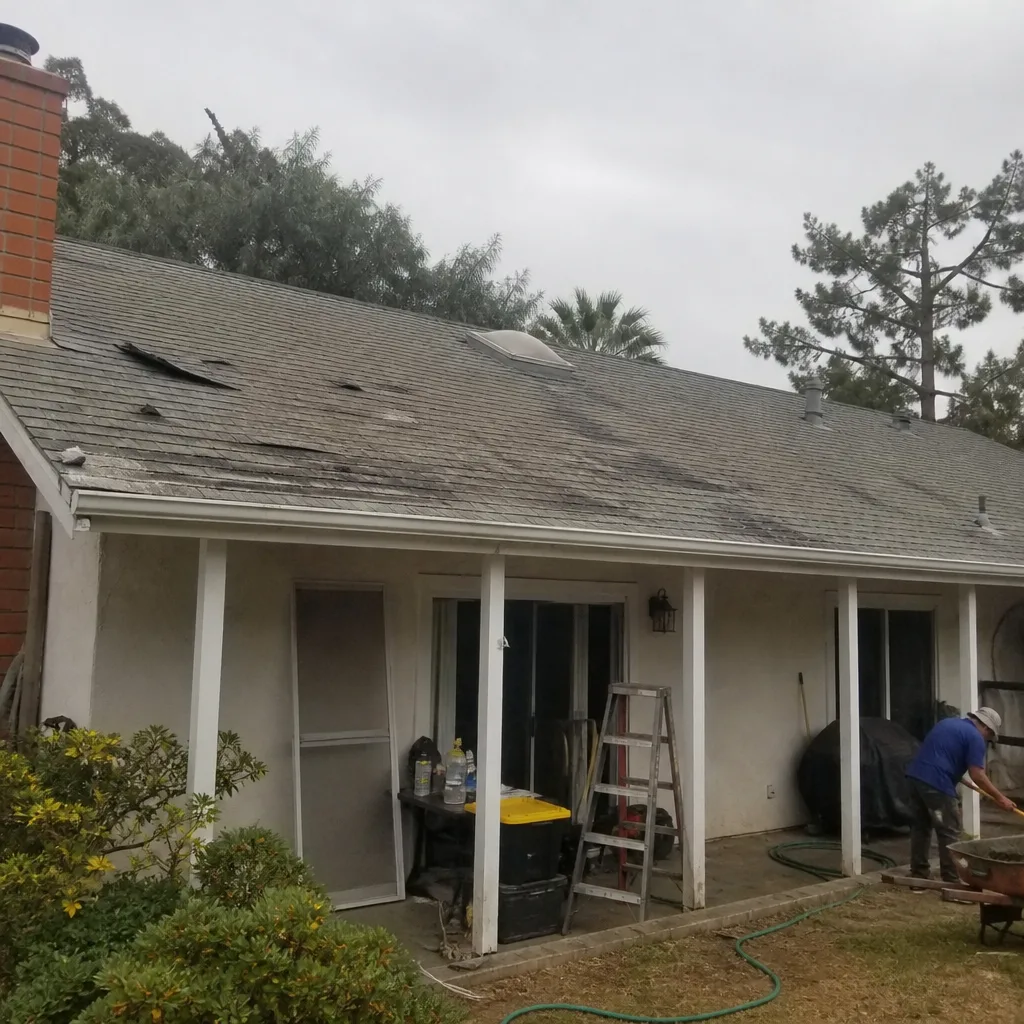 Before
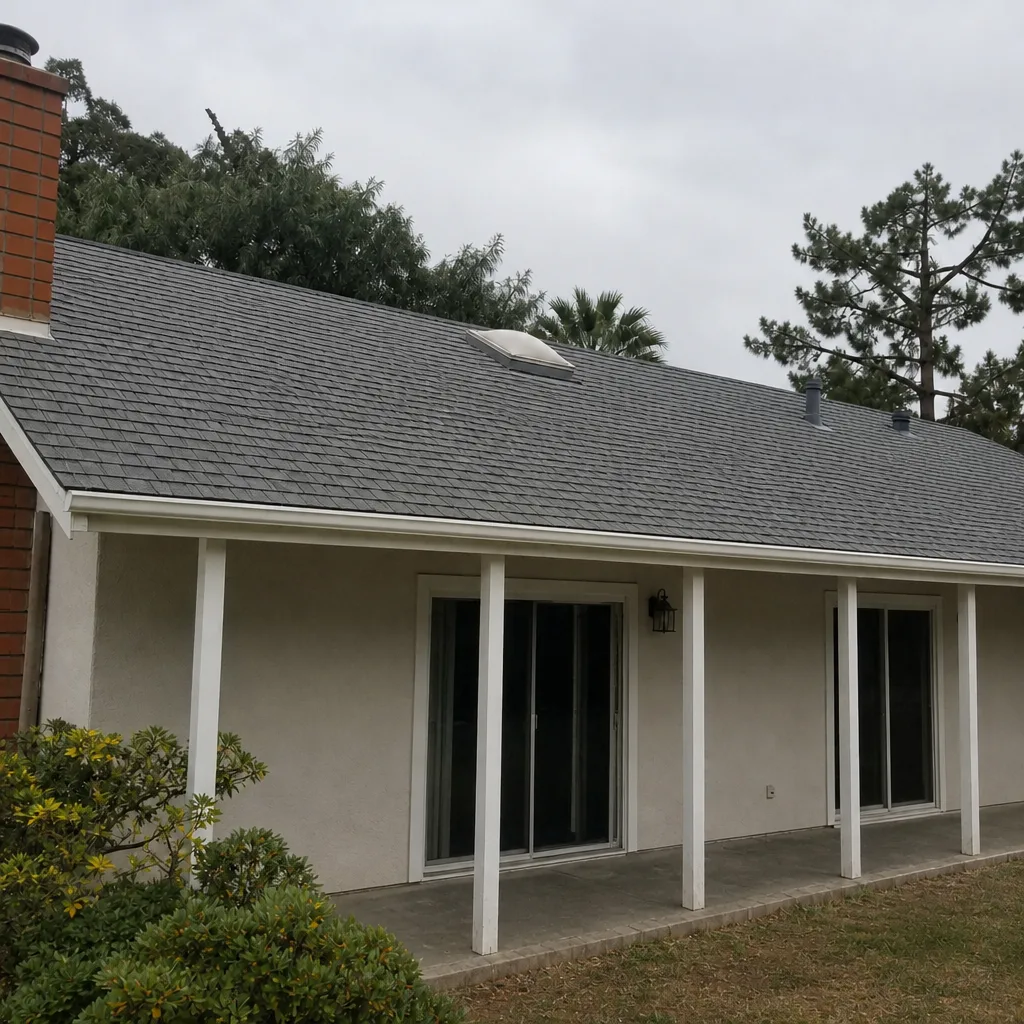 After
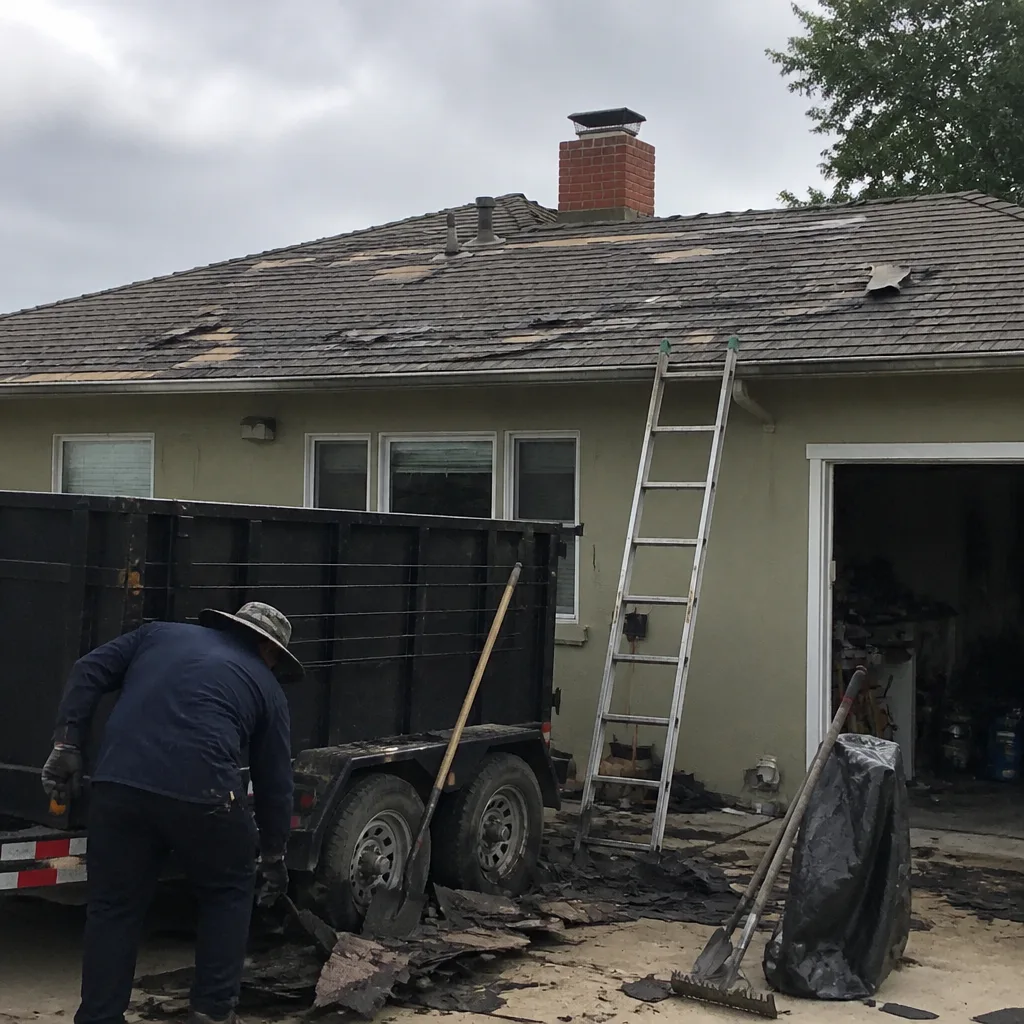 Before
 After
 Before
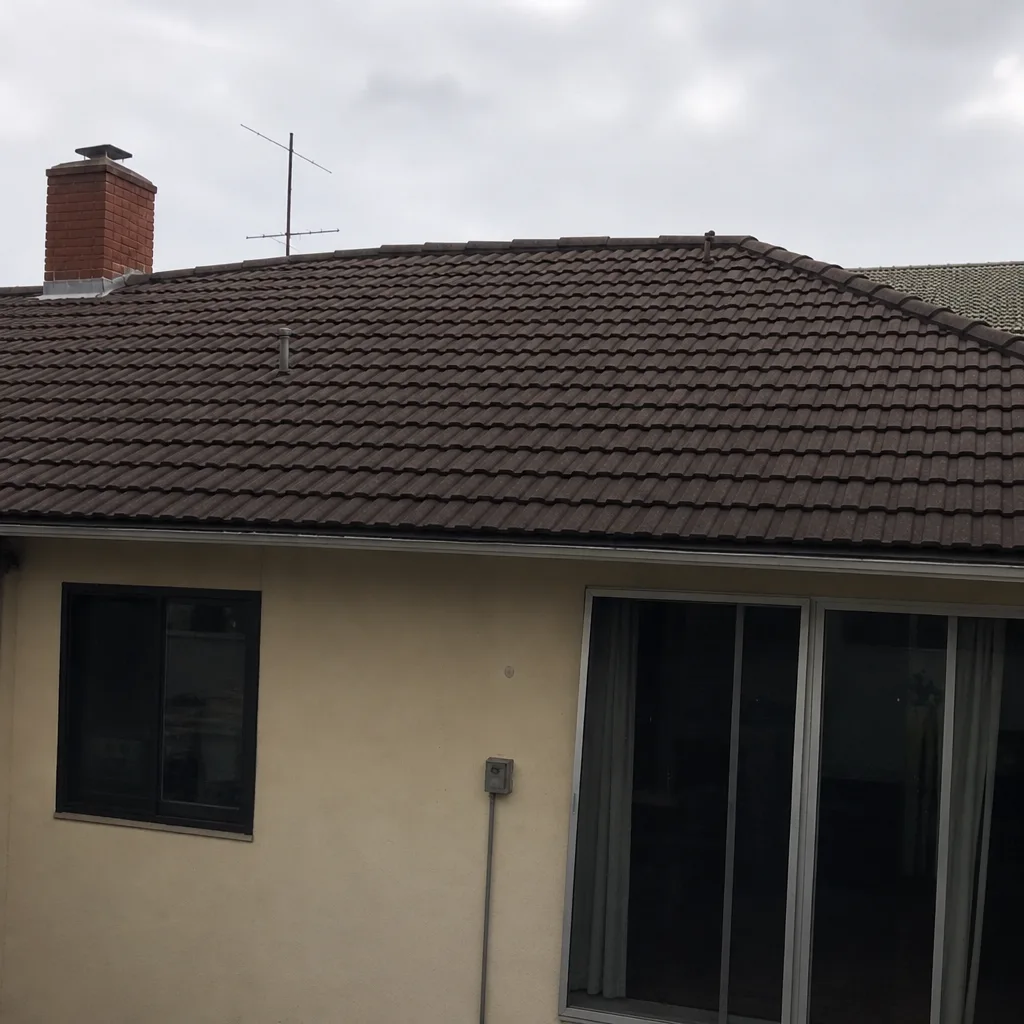 After
Common Mistakes to Avoid
- Judging the roof by how it looks from the street. Two sentences: a roof can look fine from the driveway and be failing at the ridge. The tier-one signs are the minimum, not the full picture.
- Treating every sign as an emergency. Two sentences: cosmetic aging is normal and not an emergency. Panicking at the first granule in the gutter leads to over-spending on a roof that had years left.
- Treating every sign as cosmetic. Two sentences: the opposite mistake is worse. A growing stain on a rafter is not “just aging.” It’s a sign that’s already moved from ground-level to interior, and it’s worth a look.
- Assuming a repair that looks fine is done. Two sentences: a patched section that was sealed on a dry day can fail in the first hard rain, and the repair contractor may not be available to check it. Matching the repair material to the existing roof – which is why brand-matched repair matters – is part of making a repair hold.
- Skipping the attic because you’re afraid of what’s up there. Two sentences: the attic is where the most useful information lives. A five-minute look with a flashlight will tell you more than an hour of squinting from the yard.
- Letting one slope’s problem stand in for the whole roof. Two sentences: a single slope failing is a localized failure on an otherwise intact roof. Replacing the whole roof to fix one slope is expensive, and matching the repair to the existing material usually keeps the aesthetic intact.
- Forgetting the roof has vents and flashing. Two sentences: vent boots, step flashing, and counterflashing fail before shingles do, and they fail at the exact points where water enters. Any roof assessment that skips these isn’t complete.
When to Call a Professional
Some signs are safe to watch. Others need a look before the next rain. Call us when you’re seeing any of the following:
- Water staining on interior ceilings, walls, or rafters, or a musty smell in the attic
- Granule loss concentrated on one slope, or shingle tabs that are curling, cracking, or missing
- A spongy or soft spot anywhere on the roof decking
- Efflorescence or stucco cracking at the chimney or parapet that has returned after cleaning
- Any loose or visibly soft ridge cap, especially on a tile roof
- A roof you cannot remember having inspected, on a home more than a couple of decades old
If you’re not sure whether a sign belongs in that list, that’s fine – it’s exactly why we offer a free estimate. Hartwell Roof Repair offers free estimates in Ventura. Call (833) 946-8911. We answer 24/7. Fast dispatch from 7am to 7pm, Sunday through Friday.
A note on safety before you go up: walking a roof, especially a tile or older shingle roof, is genuinely dangerous, and the risk of a fall is higher than the risk of missing a sign. If you can’t safely get to a location, don’t. Have a professional check it.
Frequently Asked Questions
The most common signs we see in Ventura are granule accumulation in gutters and along the base of downslopes, dark algae streaking on north- and east-facing slopes, and efflorescence or hairline stucco cracks at parapets and chimneys. These are often the first indicators that shingles are losing surface protection or that water is entering an assembly it shouldn’t. Call (833) 946-8911 for an exact assessment.
A localized sign on an otherwise intact roof usually calls for repair, while structural aging across multiple slopes, wet spots in more than one location, or a roof whose repair cost is out of proportion to its remaining value calls for replacement. The right answer for your roof depends on the pattern, not just the appearance. Call (833) 946-8911 and we’ll give you a straight assessment.
You can safely check ground-level signs with binoculars and interior clues in the attic, and those two tiers catch most problems early. You should not walk the roof itself, because falls are a real risk and reading texture and decking takes experience. For the third tier, call (833) 946-8911 for a professional inspection.
Discolored insulation is a reliable sign of moisture in the attic, most often from a roof leak or a ventilation problem, and the pattern of the discoloration usually points to where the moisture is coming from. A dark, matted patch almost always maps to a specific roof failure above it. Call (833) 946-8911 to locate it.
An inspection is worth doing once the roof is past its first decade, and again after any major storm or when you notice a new sign. A roof that has never been inspected has no baseline, and a lack of recent service is itself a reason to schedule one. Call (833) 946-8911 for a free inspection estimate.
A single hairline crack at a parapet is usually cosmetic, but cracks that run in a straight line, appear in the same place on multiple walls, or keep returning after a repair are a sign that water is getting in behind the stucco and the roof assembly. That’s the point to have it looked at. Call (833) 946-8911 for a free estimate.
The Bottom Line
The warning signs that save homeowners the most money aren’t the dramatic ones – they’re the quiet ones: darkening on a north-facing eave, efflorescence on a chimney, granule loss concentrated on a single slope, a spot of discolored insulation in the attic. Ventura roofs tend to age unequally, and the slope that’s doing the most work is the one worth watching. Catching a warning sign while it’s still ground-level is how a roof stays in the repair column instead of the replacement column. And when a sign is past a quick look, a professional assessment is the fastest way to an honest answer.
We’ve built our whole approach around the idea that a repair, done well and matched to your existing roof, is usually the better answer than a replacement – and the seven major manufacturer lines we work with, including GAF, CertainTeed, and Owens Corning, let us match repairs to the roof you already have. One call covers inspection through repair through replacement, and it’s the same company on the phone and on the roof. Call (833) 946-8911. We answer 24/7. Fast dispatch from 7am to 7pm, Sunday through Friday. Estimates are free, and the written estimate sets the price.
Written by the team at Hartwell Roof Repair.