
Last updated November 16, 2026
 Architectural shingles
 Metal roofing
 Tile roofing
 GAF
 Owens Corning
 Flat & low-slope
Free roof inspection with deck photos before we talk money - GAF and Owens Corning certified installation
Roof Repair Troubleshooting in Ventura: Common Problems and How to Fix Them
If your ceiling stain sits directly under a bathroom vent, your first instinct is to blame the vent. In Ventura homes built before 1990, that stain is more often traced to a failed valley flashing several feet away. Water doesn’t fall straight down inside a roof assembly; it travels along decking, rafters, and sheathing until it finds a seam it can pass through. That single truth changes how you troubleshoot. This guide works backward from the failure patterns we see most in Ventura, maps each symptom to its likely source, and shows you what you can safely check yourself before you call anyone.
Quick Answer
Most roof leaks in Ventura trace to flashing failures at valleys, penetrations, and wall intersections, not to missing shingles. Interior stains, bubbling paint, and attic moisture each point to different exterior zones, and the spot on your ceiling is usually not where the water is entering. Photograph from the ground, check the attic, and let a professional inspect the roof surface itself.
Styles & brands we work with
- Architectural shingles
- Metal roofing
- Tile roofing
- GAF
- Owens Corning
- Flat & low-slope
Table of Contents
- The Symptom-to-Source Map
- Why October Wind Damage Stays Hidden Until December Rain
- Flashing, Shingle, or Ventilation: Telling Three Identical Symptoms Apart
- What You Can Safely Check, and What You Can’t
- How to Tell If a Previous Repair Made Things Worse
- Matching Materials During a Repair
- Repair or Replace: The Decision Framework
- What a Proper Roof Inspection Covers
The Symptom-to-Source Map
Every interior symptom in a Ventura home corresponds to a specific exterior failure zone. The mistake most homeowners make is matching the interior spot to the roof surface directly above it. Water migrates laterally, often six to ten feet, before it comes through. Here’s how the three most common symptoms actually map to their sources.
Interior water stains (brown rings, yellowish halos). These almost always indicate an active or recent leak on the roof surface. The likely culprits are flashing at valleys, chimney surrounds, vent pipes, or where a wall meets the roof plane. A stain that grows after rain is live. One that’s set and stable may be old, but old leaks can also reactivate when sealant dries out. Don’t assume a dried stain is safe.
Bubbling or peeling paint on ceilings and upper walls. This points to chronic moisture rather than a single event. Often the roof is leaking slowly enough that the drywall gets damp repeatedly without ever saturating enough to drip. In Ventura, where humidity is usually low, bubbling paint stands out as a warning sign. It suggests water has been entering over weeks or months, not hours.
Attic moisture, condensation on rafters, or a musty smell. These usually indicate a ventilation failure rather than a leak. Poor airflow traps warm, moist air under the deck, and that moisture condenses on the cool underside of the roof. It can look exactly like a leak, with staining on sheathing and rusted fasteners. The fix isn’t a patch; it’s correcting intake and exhaust balance.
How to use this map in practice:
- Note the exact spot, size, and color of the interior symptom.
- Check the attic directly above and upslope of that spot.
- Look for a matching water trail on rafters or decking.
- Record whether the symptom worsens after rain or appears regardless of weather.
- Trace upward from the attic evidence to the likely exterior zone.
For homeowners in Ventura’s midtown and hillside neighborhoods, where roofs often intersect multiple times and vent pipes cluster, the map gets complicated quickly. That’s where a professional inspection earns its keep.
Why October Wind Damage Stays Hidden Until December Rain
Ventura’s rain window runs roughly December through March. The winds that cause the most roof damage, Santa Ana events, arrive earlier, often in October and November. That gap is the problem. A shingle lifted by a wind gust in October may not cause a leak until the first hard December rain pushes water under it. By then, the homeowner has forgotten the wind event entirely.
This seasonal lag creates a specific troubleshooting window. After any significant wind event, it’s worth a self-check from the ground. Bring binoculars and walk the perimeter of your home.
What to look for after a wind event:
- Shingles that are lifted, curled, or sitting at uneven angles
- Visible gaps in the roof plane where you can see underlayment
- Loose or missing ridge caps along the peak
- Debris (branches, palm fronds) sitting on the roof surface
- Displaced flashings around the chimney or vent pipes
- Granules collecting in gutters or at downspout outlets (a sign of shingle wear or impact)
If you see any of these, document them with photos from the ground. Do not climb. Lifted shingles are a warning, but a damaged shingle or compromised flashing six feet away might be the actual water path. That’s why a ground-level photo and a professional inspection together tell the real story.
For a deeper look at how we handle wind and impact repairs on Ventura properties, see our roof repair page. And if the damage is extensive enough that patching won’t hold, the decision framework in our roof replacement section covers when a full tear-off makes more sense.
Flashing, Shingle, or Ventilation: Telling Three Identical Symptoms Apart
From inside the attic, three completely different failures look identical. All three produce damp sheathing, discolored wood, and a musty smell. The repair for each is different, and using the wrong one wastes money without solving the problem. Here’s how to distinguish them.
Flashing failure
Flashing is the metal that seals roof-to-wall, roof-to-chimney, and valley intersections. It fails through corrosion, incorrect installation, or sealant that dries and cracks. Signs of a flashing failure include:
- Water stains clustered near a wall, chimney, or valley
- Visible rust or separation where the metal meets the roof plane
- Staining that appears in the same spot every rain event
- Water pooling or staining on the attic side of an intersection
Shingle failure
Shingles fail through age, impact, or wind. When shingles lose granules, crack, or tear loose, water gets under them and reaches the deck. Shingle failure often shows as:
- Staining that seems to migrate or appears in different spots after different storms
- Granule accumulation in gutters or at downspouts
- Visible cracks or bald patches on the roof surface
- Water entering directly below a visibly damaged area
Ventilation failure
Ventilation problems produce moisture from inside the house, not from outside. Poor intake or exhaust airflow traps humid air under the deck. Ventilation failure looks like:
- Condensation or frost on the underside of the roof deck (rare in Ventura but possible in cold snaps)
- Mold or mildew on rafters and sheathing
- Musty smells in the attic and upper rooms
- Staining that appears independent of rain events
The trick is that a ventilation failure and a flashing failure can coexist. A chronically damp attic degrades flashing sealant faster. That’s why Hartwell Roof Repair assesses before we recommend: a single fix that ignores a secondary cause just moves the problem sideways.
What You Can Safely Check, and What You Can’t
Homeowners often want to know how much of this they can handle themselves. Quite a bit, actually, if you stay on the ground and in the attic. But there’s a hard line, and it’s worth understanding why.
What you can safely do:
- Photograph the interior symptom, the attic evidence, and the roof from the ground
- Walk the perimeter with binoculars to spot obvious damage
- Check the attic for water trails, dampness, or discolored decking
- Look for daylight showing through the roof deck in the attic
- Note the timing and pattern of leaks (after rain, after wind, or independent of weather)
- Look in gutters for granule buildup
- Take photos of any interior damage with a tape measure for scale
What requires a professional:
- Any walking on the roof surface
- Removing or repositioning shingles
- Inspecting or repairing flashing
- Working near the roof edges or ridge
- Assessing the condition of the underlayment
Here’s why the physical work matters: walking on a roof can damage shingles and void certain manufacturer warranties. If a warranty claim later becomes necessary, evidence of foot traffic in the wrong places or DIY patches can complicate it. On older Ventura homes with brittle asphalt shingles, the risk is higher. When we’re working with GAF or Tamko products, we’re careful about protecting the manufacturer’s coverage, and homeowners should be too.
The safest approach is to gather as much information as you can from below and let an insured professional inspect the surface. See our full guide to what a Ventura-area roof inspection actually covers below.
How to Tell If a Previous Repair Made Things Worse
Ventura’s older housing stock is full of caulk-over fixes. Sealant gets applied over existing sealant or directly over flashing, and it works for a season or two. Then it fails, and the failure is harder to diagnose because the original problem is now buried under layers of dried material. Here’s how to tell if a previous repair is the actual problem.
Warning signs that a prior repair is failing:
- Peeling or crumbling caulk around flashings, vents, or penetrations. Sealant should flex, not crack.
- Caulk applied directly over shingles where it shouldn’t be. This is a sign someone tried to seal a leak without finding the source.
- Patches with mismatched shingles or labels that don’t belong on the roof.
- Stains that reappear after a repair in the same spot, suggesting the source wasn’t addressed.
- Gaps between flashing and sealing material that let water seep in behind the patch.
If you suspect a previous repair is the problem, photograph it from the ground. A professional can look at the caulk pattern and often tell within minutes whether water is entering behind the sealant or through a separate failure. Either way, the fix involves removing the failed sealant and addressing the actual source. Piling more caulk on top rarely works and often makes the next repair more expensive.
Matching Materials During a Repair
One of the more overlooked troubleshooting factors is whether the repair will match the existing roof. When a single section of shingles needs replacement, an exact match matters not just for appearance but for warranty continuity. Many manufacturer warranties are tied to specific product lines; a mismatched patch can void coverage on the repaired section.
Because we work with seven major shingle lines, including GAF, CertainTeed, Owens Corning, IKO, Atlas, Tamko, and Boral, we can often find a close match for the existing roof rather than forcing a visible patch. This is where the “matched to your existing roof” approach pays off. If you’re troubleshooting a prior repair that went wrong, part of the diagnosis involves understanding what material is actually on your roof now.
What to photograph for material identification:
- A clear, close-up shot of a shingle edge from the ground
- Any visible manufacturer labels on the roof or in the attic
- The overall pattern and color of the roof from a distance
If the repair requires more than a small patch, the material choice gets broader. Homeowners in Ventura often ask whether they can upgrade one section while the rest ages. That’s a conversation worth having with a professional who can show you options rather than a single brand.
Repair or Replace: The Decision Framework
The hardest question in roof troubleshooting isn’t “what’s wrong” but “is this worth fixing.” A flashing failure on a fifteen-year-old roof is usually a clear repair. A leaking valley on a twenty-five-year-old roof with widespread shingle wear may push toward replacement. Here’s how to think through it.
Lean toward repair when:
- The damage is localized to a specific flashing, valley, or penetration
- The surrounding shingles are in good condition with granules intact
- The roof is under fifteen years old and the issue is installation-related
- The attic shows no widespread moisture or sheathing damage
- A material match is available and the repair preserves the existing warranty
Lean toward replacement when:
- Shingles are curling, cracking, or losing granules across large areas
- Leaks appear in multiple locations that don’t share a source
- The attic shows widespread damp sheathing or mold
- The roof has been patched multiple times and the patches are failing
- The cost of a full repair begins to approach the cost of replacement
This is the moment a repair-first approach matters most. We start with a full assessment and give you the honest picture, including when a full tear-off isn’t necessary. You shouldn’t be pushed toward replacement before anyone has actually inspected the roof and documented what’s failing.
The same logic applies across the region. If you’re comparing options across different areas, our broader guide to roof repair in and around Ventura can help you frame the decision.
What a Proper Roof Inspection Covers
If you’re going to call someone, it’s worth knowing what they should actually do. A superficial glance from the driveway isn’t an inspection, and it won’t catch the slow-moving failures that turn into expensive repairs later. A proper inspection takes time and covers specific zones.
A thorough inspection covers:
- Perimeter walk with the homeowner – identifying visible issues from the ground first
- Roof surface inspection – shingles, flashing, vents, valleys, ridge caps, and penetrations
- Flashing detail check at every intersection: wall, chimney, vent pipe, and valley
- Attic inspection – decking, rafters, insulation, and ventilation pathways
- Gutter and drainage review – is water moving off the roof correctly, or backing up?
- Material and warranty assessment – what’s on the roof, how old it is, and what a repair would involve
- Written findings with photos – what’s failing, why, and the options to fix it
We bring material options to that conversation rather than a single solution. If a repair is possible, we’ll say so. If replacement is the honest answer, you’ll get the reasoning. And if you want to check our full range of services, our Hartwell Roof Repair homepage is a good starting point.
Common Mistakes to Avoid
- Matching the interior stain to the exterior spot directly above. Water travels laterally along the roof deck. Always trace from the attic up and outward, not from the ceiling straight up. A stain in a Ventura home can originate six feet or more away.
- Caulking over the symptom before finding the cause. Sealant is a temporary patch at best. If the flashing underneath is failing, caulk buys a few months and complicates the next repair. Find the source before sealing.
- Assuming dry weather means the problem is gone. Ventura’s rain window is narrow (roughly December through March), which means a lot of repair needs go unnoticed during the dry months. A leak that only shows up in heavy rain can exist all year without being seen.
- Walking the roof yourself to check it. Aside from the injury risk, foot traffic can crack brittle shingles on older roofs and complicate warranty coverage. Survey from the ground and in the attic instead.
- Treating every leak as a shingle problem. In our experience, flashing failures are more common than shingle failures in older Ventura homes. Assuming it’s the shingles can send you toward the wrong fix.
- Ignoring the attic after a repair. Once the exterior is repaired, the attic tells you whether the fix worked. If sheathing stays wet, the moisture is still entering somewhere. Check it after the next rain event.
- Skipping the second opinion when the first diagnosis is “full replacement.” A repair-first contractor will show you what’s actually failing. If a whole-roof replacement is recommended without a documented inspection, get a second look.
See the difference
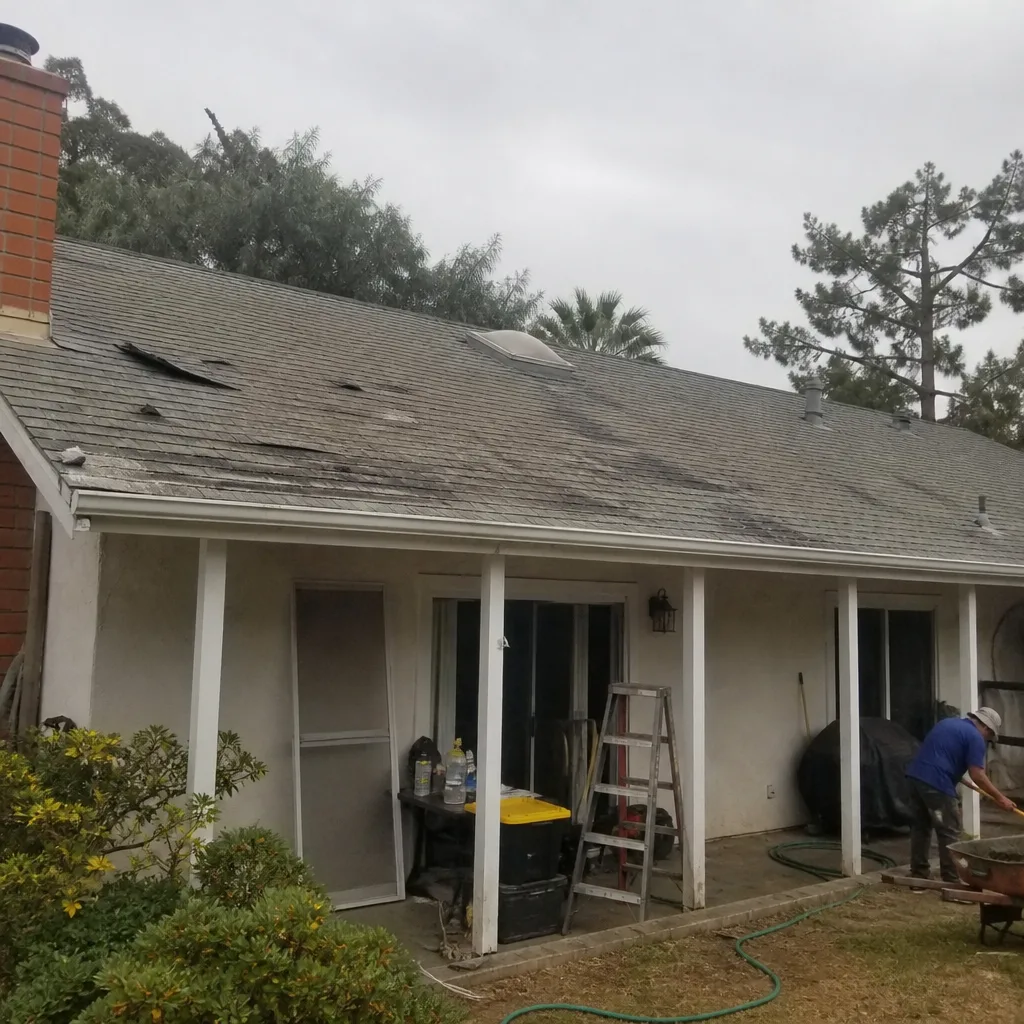 Before
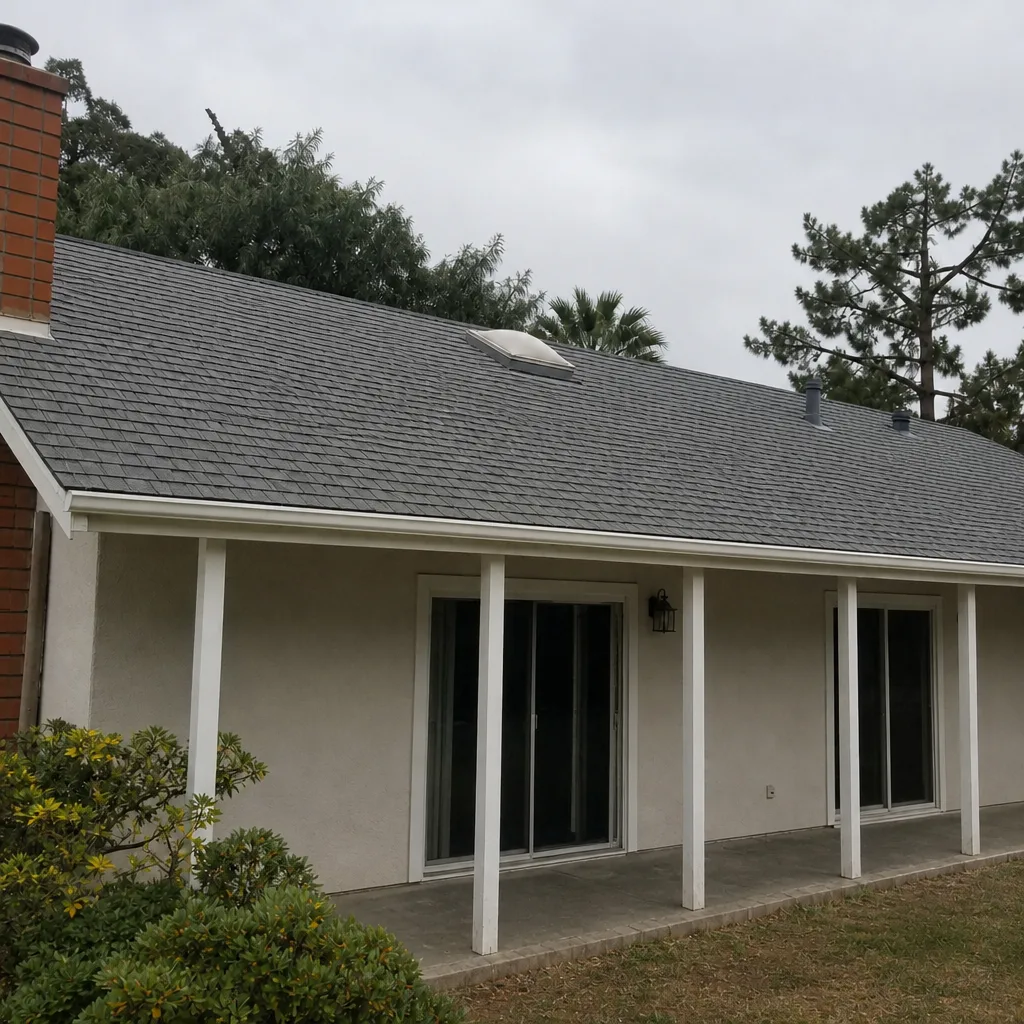 After
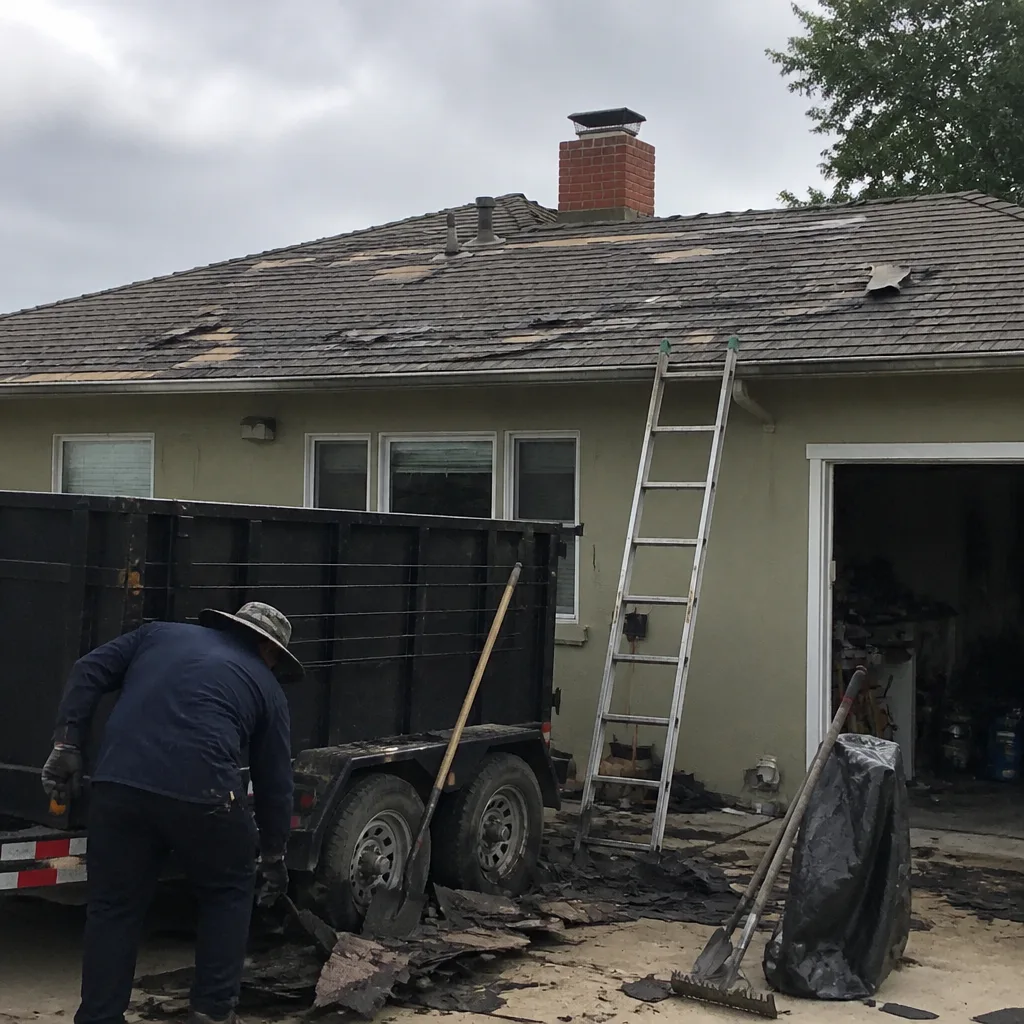 Before
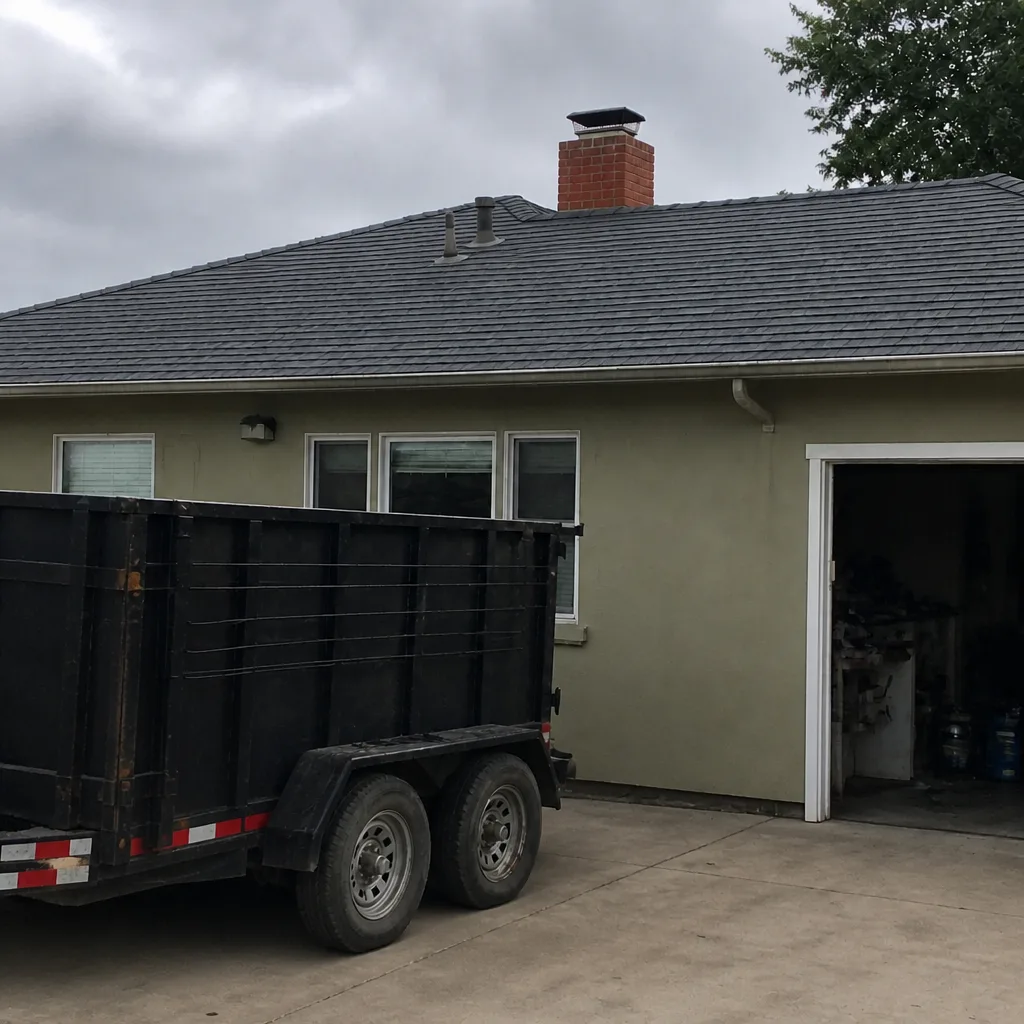 After
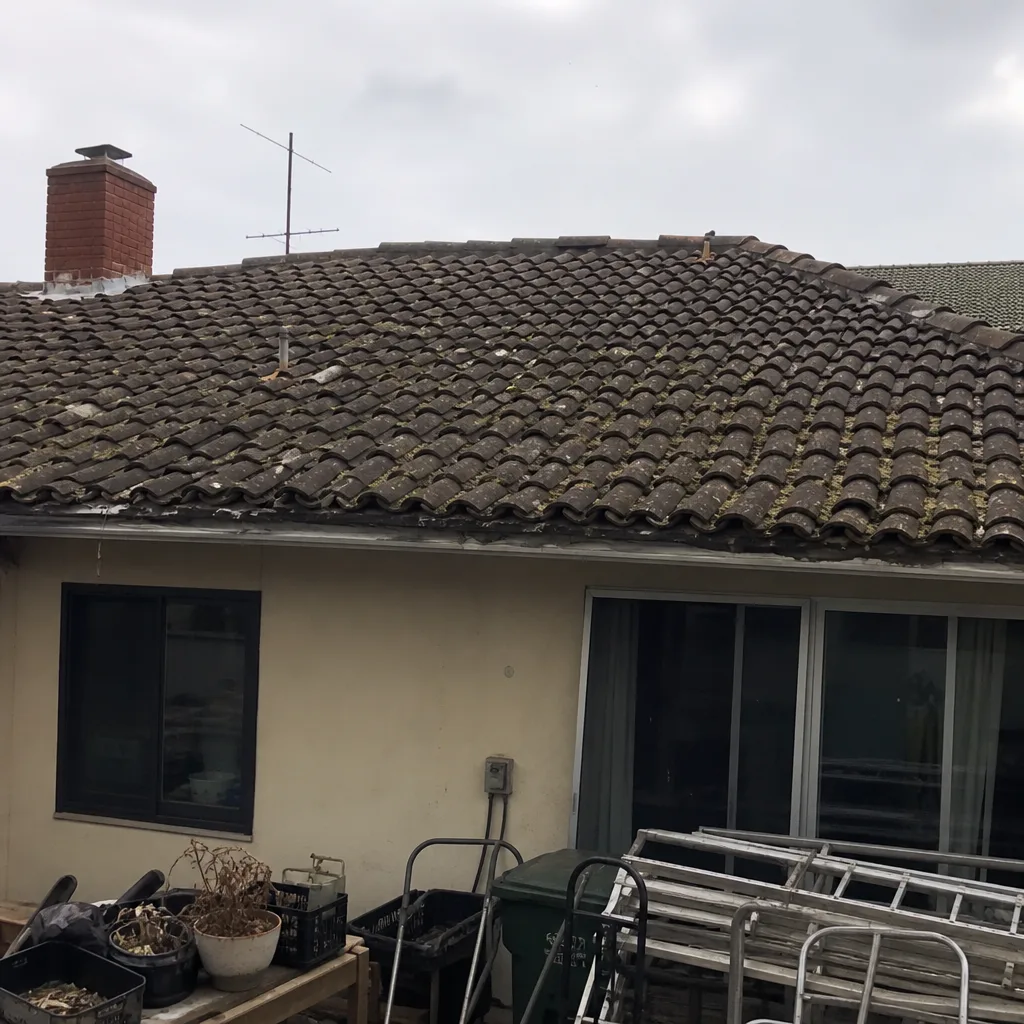 Before
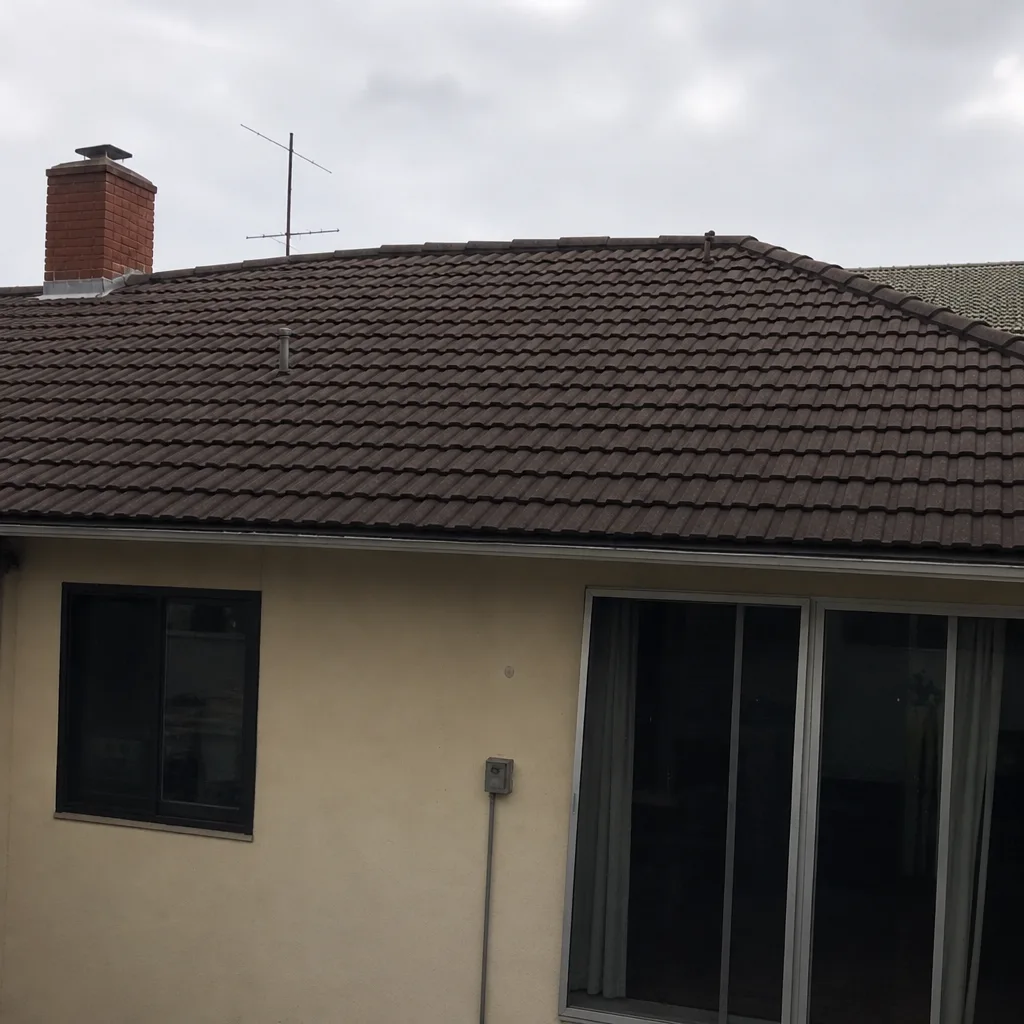 After
When to Call a Professional
Call a professional if you see any of the following: an active leak during rain, water stains that have grown since the last storm, bubbling paint on ceilings, mold or musty smells in the attic, lifted or missing shingles after a wind event, or a prior repair that’s failing. Also call if you simply want a clear picture before the next rainy season. We inspect first and diagnose honestly, and Hartwell Roof Repair offers free estimates in Ventura. Call (833) 946-8911. We answer 24/7. Fast dispatch from 7am to 7pm, Sunday through Friday.
Frequently Asked Questions
Start in the attic and trace the water trail up and outward from the interior stain, not directly above it. Water migrates along the deck and rafters, so the entry point is usually several feet from the visible stain. If you can’t follow the trail, call for a professional inspection.
You can document it safely from the ground and in the attic, but repairs on the roof surface require training, proper equipment, and an understanding of flashing and shingle systems. DIY patches can damage shingles, void manufacturer warranties, and make the next repair harder. In our experience, most leaks that look simple from inside turn out to involve flashing.
Not reliably. Our humid days and occasional fog can keep trapped moisture in sheathing and insulation for weeks. Dry spells help, but they don’t reverse moisture damage already in the attic. If a leak has existed through one rain season, the wood has likely absorbed it. For an exact inspection, call (833) 946-8911 and we’ll take a look.
Most localized repairs are completed in a single visit, though the timeline depends on the scope and material availability. A flashing replacement or single-valley repair is quicker than a larger section repair. The written estimate sets the final price and the scope. For the next available window, call (833) 946-8911.
It depends on the extent of the failure. A localized flashing or valley issue on a twenty-year-old roof can sometimes be repaired if the surrounding shingles are still functional. Widespread shingle wear, multiple leaks, or repeated patches tend to push toward replacement. An inspection gives you the honest picture.
Permit requirements depend on the scope and your local building department. Most larger repairs or replacements require a permit; minor repairs may not. We can walk you through what your project needs and ensure inspections pass if a permit is required. Call (833) 946-8911 to talk through your specific job.
The Bottom Line
Roof troubleshooting comes down to tracing symptoms rather than guessing. Water travels laterally, so the stain on your ceiling is rarely above the entry point. Flashing, shingle, and ventilation failures produce similar symptoms from inside the attic and require different repairs. Document what you can safely from the ground and the attic, photograph everything, and let a professional inspect the roof surface. If you’re seeing signs of a leak, failed flashing, or a prior repair that’s not holding in Ventura, call (833) 946-8911. We answer 24/7. Fast dispatch from 7am to 7pm, Sunday through Friday. Estimates are free, and we assess before we recommend.
Written by the team at Hartwell Roof Repair.